




Bulk Sodium New Houttuyfonate 98% Powder: A Sourcing Guide for R&D
I write these field notes straight from our chemical synthesis floor. If there is one raw material that causes the most formulation disasters and regulatory rejections due to a simple naming mix-up, it is this one. "Sodium New Houttuyfonate" and "Sodium Houttuyfonate" are NOT the same molecule. Mixing them up will ruin your HPLC peaks. Here is the technical breakdown.
Let's set the record straight immediately: The word "New" in Sodium New Houttuyfonate (新鱼腥草素钠) is not just a marketing prefix. It signifies a fundamentally different chemical homologue.
While standard Sodium Houttuyfonate is based on a 10-carbon chain (Decanoyl acetaldehyde), the "New" version is synthesized using a 12-carbon chain (Lauroyl acetaldehyde). Adding those two extra carbon atoms was a deliberate breakthrough in pharmacology. It drastically improves the molecule's in vivo stability, increases its lipophilicity for better cellular penetration, and significantly enhances its antibacterial efficacy—particularly against stubborn Gram-positive bacteria like Staphylococcus aureus.
Reading the 98% Sodium New Houttuyfonate Spec Sheet
Pull the COA for our Sodium New Houttuyfonate 98%, and you are looking at a tightly controlled semi-synthetic derivative. We are engineering a 12-carbon adduct. Here are the hard numbers:
Assay (Purity): ≥ 98.0% Sodium New Houttuyfonate (strictly verified by HPLC to ensure C12 structure).
Chemical Name: Sodium Lauroyl Acetaldehyde Bisulfite (月桂酰乙醛亚硫酸氢钠).
Carbon Chain Length: C12 (12 carbon atoms).
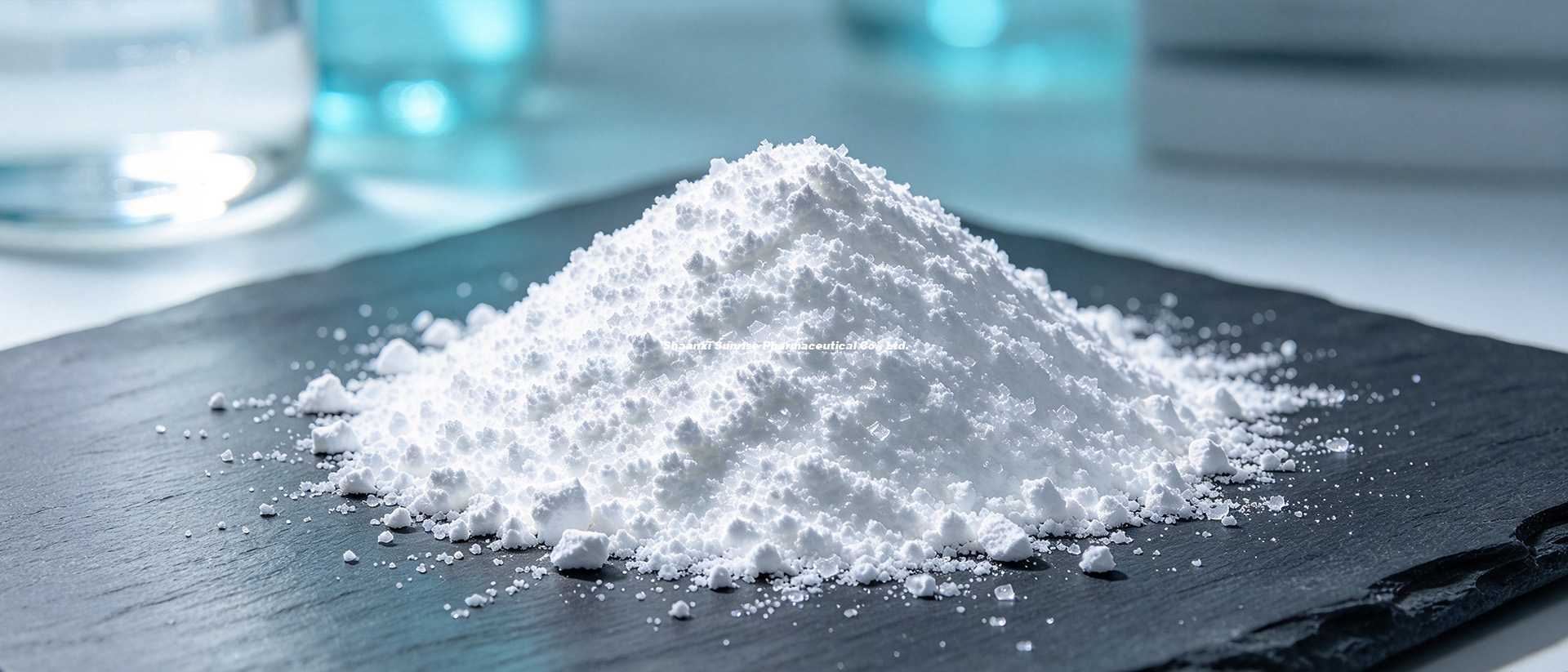
Physical State: White to off-white crystalline powder.
Solubility Profile: Soluble in warm water and ethanol.
The Homologue Difference: "New" (C12) vs. Standard (C10)
Why did the pharmaceutical industry bother inventing the "New" homologue? Because the 12-carbon chain fixes the pharmacological limitations of the 10-carbon original. Here is the operational comparison:
| Chemical Metric | Sodium New Houttuyfonate (C12) | Standard Sodium Houttuyfonate (C10) |
|---|---|---|
| Precursor Molecule | Lauroyl Acetaldehyde (月桂酰乙醛) | Decanoyl Acetaldehyde (癸酰乙醛) |
| Antibacterial Efficacy | Significantly enhanced, especially vs Gram-positive cocci. | Standard baseline efficacy. |
| In Vivo Stability | Higher stability. Slower degradation in the bloodstream. | Faster metabolic breakdown. |
| Lipophilicity | Higher (due to longer carbon chain). Better tissue penetration. | Lower. |
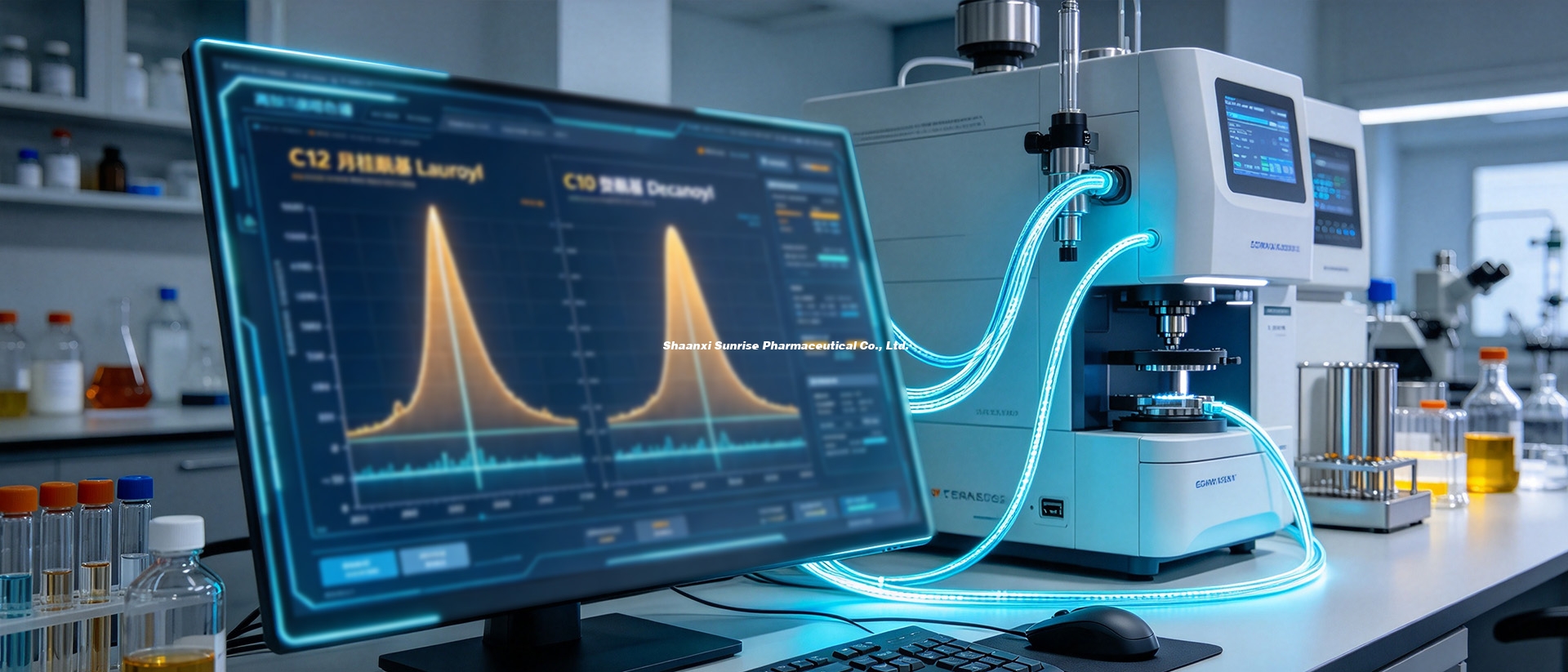
| HPLC Retention Time | Longer retention time (distinct peak). | Shorter retention time. |
Where Contract Labs Are Deploying the "New" Variant
Because it provides a more potent and stable antibacterial payload, Sodium New Houttuyfonate is specifically targeted for advanced applications:
Advanced Veterinary Pharmaceuticals: Used in premium injectable solutions and high-end soluble powders for treating severe respiratory and systemic infections in livestock.
Human Pharma R&D: Explored heavily in clinical formulations targeting stubborn respiratory tract infections where standard Houttuyfonate degrades too quickly.
High-End Dermatological Cosmetics: Deployed in clinical-grade anti-acne and anti-inflammatory serums where maximum skin-barrier penetration (lipophilicity) is required.
How to Audit a Supplier for the "New" Homologue
Substituting the cheaper standard version for the "New" version is a common trick by shady brokers. If a supplier stutters on these parameters, walk away.
Demand HPLC Proof of the C12 Chain. A generic purity test is useless here. You must demand the HPLC chromatogram proving the active is specifically the Lauroyl adduct (C12), not the Decanoyl adduct (C10).
Check for Unreacted Sulfites. Like all bisulfite adducts, poor manufacturing leaves free sulfites. Your supplier’s COA must prove the reaction was complete.
Verify Solubility Carefully. Because it has a longer carbon chain, the "New" version requires slightly warmer water to dissolve completely compared to the standard C10 version.
Iron out logistics. We ship 1 kg aluminum foil bags for pilot lab runs and 25 kg fiber drums for full commercial batching. Ensure the supplier actually manufactures the C12 synthesis rather than just trading standard extracts.

Need to evaluate this advanced 12-carbon homologue for your next project? Check the exact specifications on our Sodium New Houttuyfonate 98% product page, or browse the rest of our active ingredients under the Products directory.
Questions From the Procurement Desk
Can I substitute standard Sodium Houttuyfonate if the "New" version is out of stock?
Absolutely not. They are different molecules (C10 vs. C12). Substituting them will cause your HPLC identity tests to fail, alter the pharmacokinetic profile of your formula, and violate regulatory filings.
Why is Sodium New Houttuyfonate generally more expensive?
It utilizes lauroyl acetaldehyde (12 carbons) as the precursor rather than the naturally abundant decanoyl acetaldehyde (10 carbons). The synthesis is more complex, but it yields a more stable, potent, and highly penetrating molecule.
Is this product still water-soluble?
Yes. It is formulated as a sodium bisulfite adduct, so it retains good water solubility. However, due to the longer carbon chain, it may require slightly warmer water to dissolve as rapidly as the standard version.
Do you sell finished respiratory drugs or veterinary injections?
No, we operate purely as an upstream B2B synthesis and extraction factory. We supply the raw, bulk Sodium New Houttuyfonate 98% powder to contract manufacturers and pharmaceutical brands.
How do you prove I am getting the "New" (C12) version?
Every commercial batch is accompanied by an HPLC chromatogram that explicitly identifies the retention time of the Lauroyl (C12) adduct, guaranteeing you are not being sold the cheaper C10 homologue.